Conquer The World WW2 Warfare Guide
Fronts, army composition, and combined arms tactics for Conquer The World WW2.
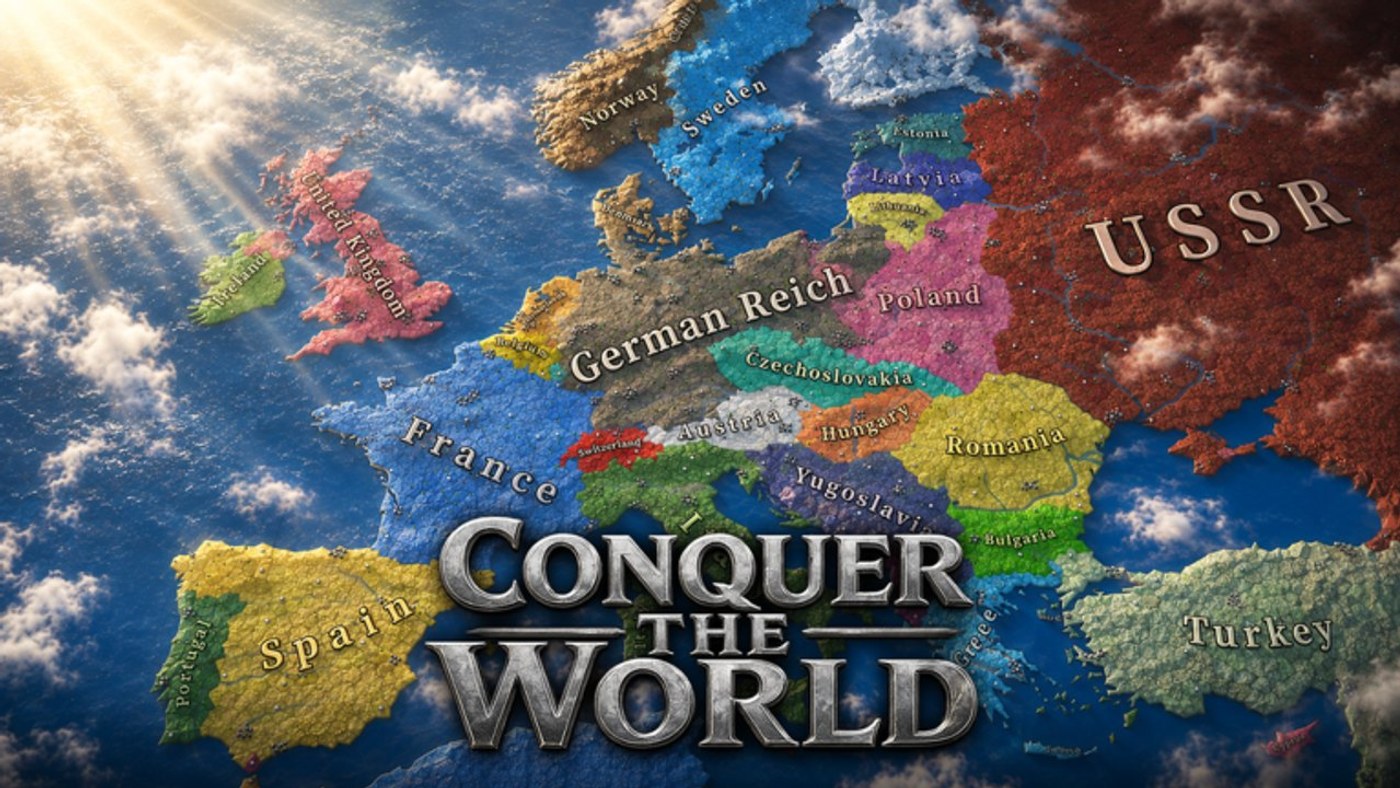
Warfare is the pillar every other system in Conquer The World WW2 (CTWWW2) ultimately feeds into — your economy funds it, your research equips it, and your diplomacy decides who you fight alone versus with allies. This guide covers how combat actually resolves and how to avoid the mistakes that turn a winnable war into a collapse.
How fronts work
Combat in CTWWW2 plays out along front lines rather than through direct control of individual soldiers. Once you assign divisions to a front and issue an order — attack, defend, or reposition — the front resolves continuously in real time based on troop numbers, equipment quality, and terrain. This means warfare rewards preparation before a fight starts far more than mid-battle micromanagement; by the time a front is already engaged, your economy and research decisions from earlier in the match are what actually determine the outcome.
Army composition matters more than headcount
A large army with outdated or insufficient equipment will lose to a smaller, well-supplied force. Before opening a front, check that your economy has actually produced enough equipment to arm every division you plan to commit — a division with a manpower shortfall or an equipment deficit fights at a fraction of its paper strength. Balance infantry, armor, and air support rather than stacking one unit type; each covers weaknesses the others have.
Justify before you attack
Declaring war without a valid justification usually applies a diplomatic penalty and can turn potential allies against you at the worst possible moment. Read Diplomacy for how war justification works and how to line up allies before the first shot is fired, rather than scrambling for support after a front is already open.
Defending against a stronger neighbor
If you are outmatched, do not simply mass every division on your border and hope for the best. Use terrain to your advantage, prioritize defensive research and fortifications, and lean on diplomacy — a non-aggression pact bought with trade concessions is often cheaper than the manpower you would lose fighting a war you cannot win. The Missiles & Forts update specifically expanded how fortified positions interact with attacking forces, so check the Updates hub for the latest specifics on fortification mechanics.
Offensive warfare and puppet states
When you are on the attack, plan for what happens after you win a province, not just how to take it. Annexing everything directly can overextend your administration, while converting newly conquered territory into a puppet state (see Diplomacy) lets you keep expanding without the overhead of directly governing every new border. Major powers running large, multi-front campaigns lean on this heavily — see Major Powers for more on managing a sprawling war effort.
Escalation to WW3 and nukes
CTWWW2 scenarios run from WW1 through WW2 into a WW3 setting where nuclear weapons become a factor. If your research has reached that point (see Research & Nukes), a nuclear-capable opponent changes the calculus of any front — a single successful strike can wipe out a concentrated army or industrial center. Spreading out high-value production and keeping an eye on rival research progress becomes a real strategic consideration once nukes are in play, not just a late-game curiosity.
Missiles, forts, and conventional fronts
The live Missiles & Forts update added a layer between standard front combat and nuclear escalation. Fortifications along chokepoints slow ground assaults and pair well with defensive play — especially for minors using diplomacy to buy time. Missiles punish dense army stacks and concentrated factories, which means your offensive and defensive front assignments should account for strike targeting, not just division counts.
Read the dedicated Missiles & Forts guide for build priorities and escalation math alongside the Nuke Rework changes documented on Latest Updates.
Warfare checklist before committing troops
- Confirm equipment stockpiles match the division count you are committing.
- Check manpower reserves so losses can be reinforced, not just replaced once.
- Secure a war justification or accept the diplomatic penalty consciously rather than by accident.
- Scout whether allies are likely to intervene on either side.
- Consider whether puppeting captured territory beats direct annexation for this particular war.
Winning consistently in CTWWW2 comes down to treating warfare as the final step of a longer plan — one built on economy, research, and diplomacy — rather than an isolated decision made in the heat of the moment.
Frequently Asked Questions
Quick answers to the most common questions.
How does combat work in Conquer The World WW2?
Combat resolves along front lines in real time based on troop numbers, equipment, and terrain, rather than direct control of individual units.
Does army size matter more than equipment?
No — a smaller, fully equipped force typically beats a larger army with equipment shortfalls, since under-supplied divisions fight below paper strength.
What happens if I declare war without justification?
You typically take a diplomatic penalty and risk losing potential allies, so building justification first is usually worth the wait.
Should I annex or puppet conquered territory?
Puppeting avoids the administrative overhead of direct rule and works well for large, multi-front campaigns, while annexation gives full direct control.
How do nukes change warfare in Conquer The World WW2?
Once a nation reaches WW3-era nuclear capability, a single strike can devastate a concentrated army or industrial center, making spread-out production a real defensive consideration.
How do missiles and forts affect front combat?
Forts strengthen defensive fronts on chokepoints; missiles punish concentrated forces and factories — both are live systems covered in the Missiles & Forts guide.